


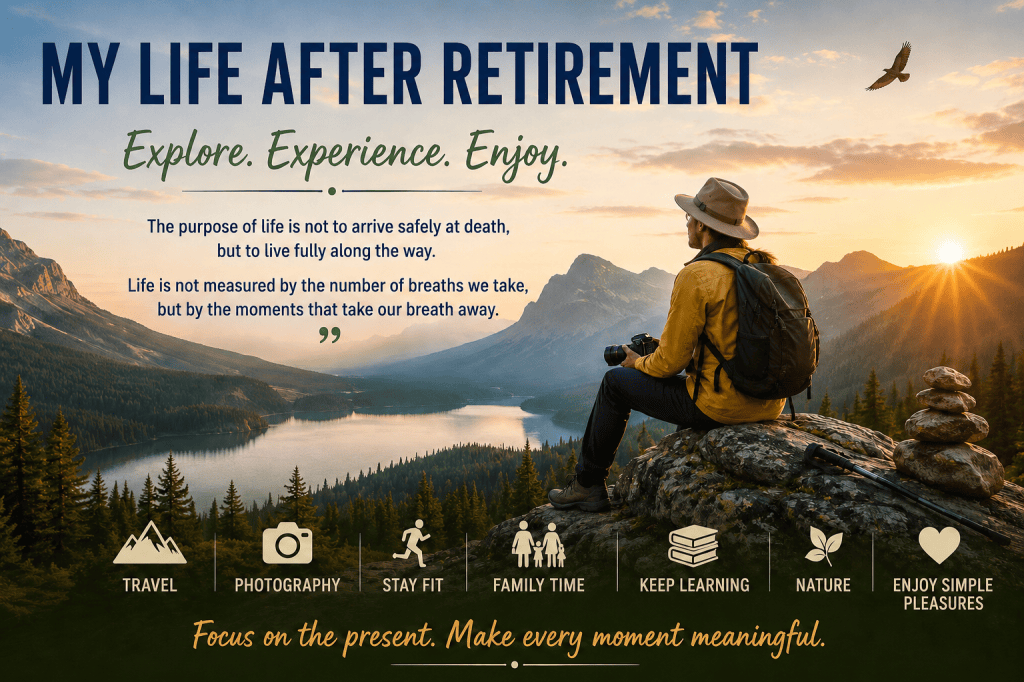
I prefer to live in present. Past is gone and future is unknown. The only moment which can be made memorable is present. Live it to the fullest and enjoy.
Above picture depicts my life after retirement. Explore Experience and Enjoy. This is not only applicable to travel but also to the life in general.Every day you meet new people, explore them, understand them and enjoy the moments together. Building connections makes you resourceful and happy.
In Hindu philosophy and ancient Indian tradition, the human lifespan (ideally calculated as 100 years) is divided into four distinct stages or phases, known as the Four Ashramas. Each stage lasts roughly 25 years and serves a specific purpose in spiritual and personal development.
1. Brahmacharya (Student Life)
- Age: Birth to 25 years
- Focus: Education, discipline, and character building.
- Details: This is the phase of learning and celibacy. A student’s primary duty is to acquire knowledge, learn skills, develop strong moral values, and prepare physically and mentally for the future.
2. Grihastha (Householder Life)
- Age: 26 to 50 years
- Focus: Marriage, family, career, and community.
- Details: This is the most active social and economic phase. Individuals marry, raise a family, earn a livelihood, and contribute to society. It is the period for fulfilling worldly desires (Kama) and earning wealth (Artha) through righteous means.
3. Vanaprastha (Retirement Life)
- Age: 51 to 75 years
- Focus: Detachment, transition, and service.
- Details: This is the gradual withdrawal from worldly duties. As children grow up and take over responsibilities, individuals hand over household duties to the next generation. The focus shifts toward spiritual studies, community welfare, and deep reflection.
4. Sanyasa (Renunciation Life)
- Age: 76 years onwards
- Focus: Total detachment, spirituality, and Moksha (liberation).
- Details: This is the final stage of life where an individual completely renounces all material possessions, family ties, and worldly desires. The person lives a simple, ascetic life entirely dedicated to spiritual realization and preparing the soul for ultimate liberation.
I am in the third phase of life : Vanaprastha Ashrama – which is traditionally a time of transition. It is a conscious shift from a “family person” focused on earning and raising children, to a “society and spiritually focused person”.
While it literally translates to “retiring to the forest”, in modern times, Vanaprastha is a state of mind rather than a physical location. It is about detaching from daily household micromanagement and finding fulfillment in higher pursuits.
Here are the different, meaningful ways I enjoy and experience the Vanaprastha stage today:
1. Spiritual Growth & Devotion (Sadhana)
- Holy travels – We travel together to the places of worship. My wife loves to visit temples, while I prefer to visit Jungles and Nature Reserves. So the agreement is such that we will visit two temples and then I am allowed to visit one National Park.
- Deep Study: Devoting dedicated hours to reading philosophical texts, joining study circles, or learning scriptures like the Upanishads and Bhagavad Gita. I have completed Bhagwad Geeta course and now studying Dnyaneshwari.
- Meditation: Developing a regular, daily contemplative Yoga practice to calm the mind and detach from material worries.
2. Giving Back to Society (Seva)
- Quiet Mentorship: Shifting your professional knowledge from “commanding and earning” to “guiding and advising”. WordPress helps me in this sharing process.
- Volunteering: Working with NGOs, local community centers, teaching underprivileged children, or managing neighborhood welfare associations.
- Passing on Wisdom: Engaging in selfless community service, helping build up the next generation without expecting anything in return.
Practice Detachment – This is most difficult to practice. I am currently practising the detachment. The detachment means, staying away from the daily life of your children and the micromanagement of house. This detachment does not mean you run away from responsibilities or get ignorant about the family needs.
But detachment essentially means, not getting emotionally involved in the issues faced by your children or any other family members. Giving advice only when asked for. Not behaving like a nosy person. Facing the happy or unhappy situation in the same way.
So I will continue to live the current life. Practice Vanprasthashram. Every stage is best for the particular age.
Thank you my dear readers for stopping by
Stay Happy and keep smiling 😊
Discover more from Awesomeplaces
Subscribe to get the latest posts sent to your email.
 Awesomeplaces