


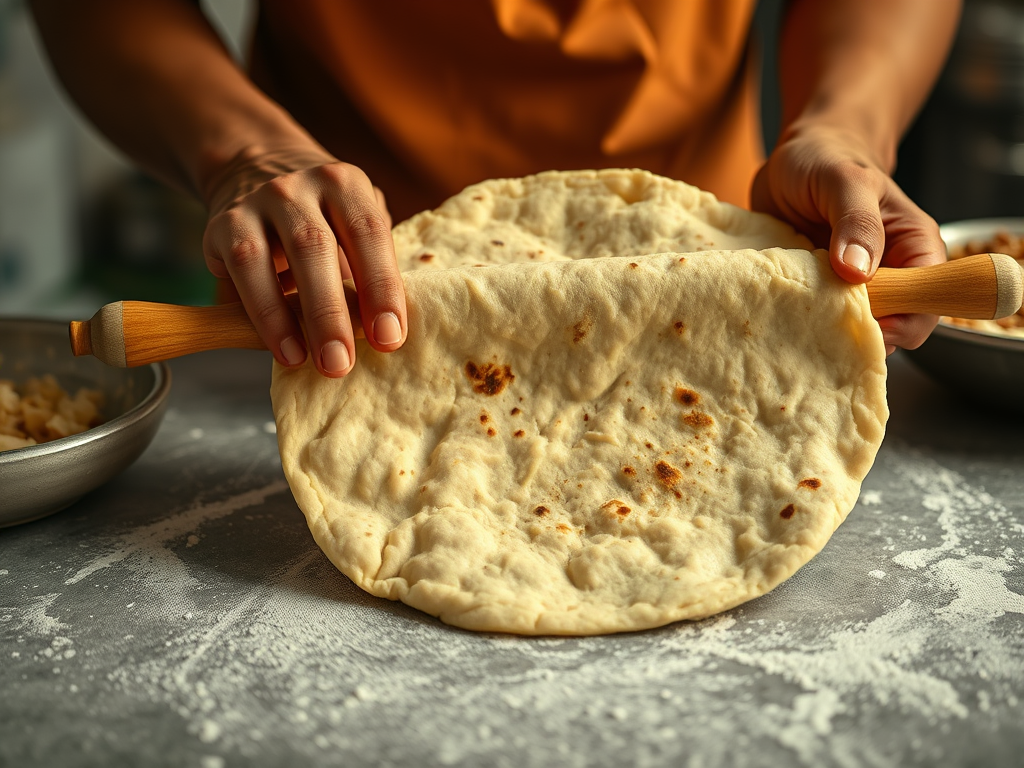
I can cook variety of food items and masala khichadi being my speciality but I have never tried to make chapati ( Indian flat bread ). For me it is nightmare. This is a story of such a failed attempt to make chapati.
I was on a secret mission to make chapati myself and I was confident that I have keenly observed my wife making delicious chapatis or fulkas and I can easily make one. But I avoided to declare at home, with the fear that it will be a joke of the day if I fail. I tried this when I was alone at home.
I made a nice dough soft and flexible. I was delighted that the chapati will be nice. Then came the time when it was to be rolled on the chakla ( wooden round shaped flat piece ) with wooden rolling pin. Don’t laugh at me but in the first attempt of rolling, the chapati was fat from one corner and very thin from other corner. In second attempt the chapati became map of India. I was really wondering, how skilfully the women at home rolls the chapati in perfect round shape having uniform thickness.
Then in third attempt, I gave up to make round shape and the unknown country map was accepted with the excuse that anyways it will be consumed immediately 😆. Then the country map was put on the tawa to roast. Roasting it evenly on the hot pan was most difficult task. Twice my fingers were burnt and somehow the chapati got roasted.
I made multiple chapatis like this for me and my daughter. Not a single chapati was round shaped and evenly roasted. Finally I ate some of them and kept few for my daughter. When she returned from college, I offered her to eat them. When I told her that I have made the chapatis, she said proud of you papa. I said try them and then give the feedback. Her first look at the chapatis was , like are they really chapatis? And the face was so awkward when she took first bite. It has become hard and difficult to bite. So it was completely failed attempt right from making the dough. Then she took my class on how to prepare right dough and how to roll perfect round shaped chapatis.
This was my first & last attempt to make chapatis. My chapatis have chronic identity crisis. They start life as promising, round dough balls, but by the time my rolling pin is done with them, they have transformed into misshapen territories with uneven borders. While my family insists they taste good and even I admit they do but the lack of a perfect cicrcular shape chapati haunts me.

Even with a perfectly soft rested dough, the rolling process is a minefield of potential errors. My primary downfall was my rolling technique. I tended to press too hard in middle, creating a thin centre and thick, unruly edges or vice versa. I would panic when the dough started to stick and use a generous, heavy handed amount of dry flour. While a light dusting is necessary, too much dry flour makes the chapati stiff and brittle.
The final barrier to perfection was cooking surface. My failure wasn’t just about the dough or the rolling. The final hurdle was hot tawa. The tawa used to be either not enough hot, causing the chapati to dry out or too hot, burning it before it could cook evenly. It is completely embarassing to make such chapatis while my wife or daughters make flawless chapatis so easily.
Then we have made an agreement in the family, that I will cook all other food items except chapati. Now I make all rice varieties or breakfast items ( whenever the mood is good) and the chapatis are made by my wife. It’s a win-win situation for me.
I salute all the master chefs who can make perfect circular shaped soft chapatis.
Thank you readers for stopping by
Stay Happy and Keep smiling 😊
Discover more from Awesomeplaces
Subscribe to get the latest posts sent to your email.
 Awesomeplaces